
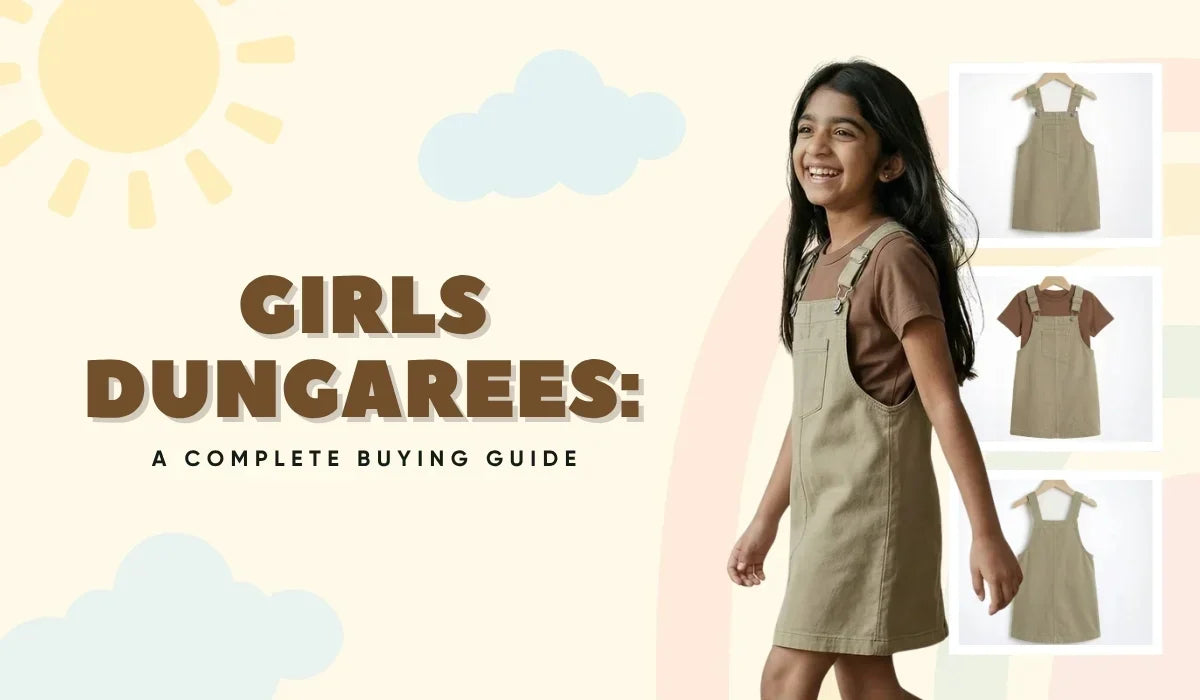
Dungarees keep coming back into a little girl's wardrobe, and not by accident. One piece does the job of an outfit, the straps forgive a growth spurt, and there is barely any styling decision left for a rushed morning. If you are shopping for girls dungarees for the first time, or replacing one your daughter has outgrown, here is what actually matters before you buy.
A Quick Word on Where Dungarees Come From
The word itself is Indian in origin. In the 17th century, a fabric called Dungri cloth was woven near what is now Mumbai, prized for being tougher than other cotton fabrics of the time. British traders anglicised the name to dungaree and began exporting it for workwear.
British colonial traders adapted the sturdy Dungri cloth into what we now call dungarees, and the design crossed over into bib overalls when Levi Strauss created the first recognisable pair of bib overalls in 1853 for workers who needed a garment that was quick to put on and durable enough for daily wear.
A century later, dungarees became a practical uniform for Land Girls during the First World War, proving the design worked as well for women and children as it did for factory workers. That functional history is exactly why the silhouette still holds up in a child's everyday wardrobe today: it was built to move in, not just to look good.
What Makes a Good Dungaree Fabric and Fit for Girls
Not every dungaree on the market is built the same way. Before you add one to cart, check three things: fabric, strap adjustability, and seam finish.
-
Fabric: Pure or kala cotton breathes better than synthetic blends and sits softer against a child's skin through a full day of play.
-
Adjustable straps: Straps that lengthen give the dungaree a second or third season of wear instead of one.
-
Reinforced seams and pockets: Kids test every seam by climbing, crawling and sitting down hard. Flat-felled or double-stitched seams last longer through repeated washes.
On sizing specifically, most fit guides recommend leaving room rather than buying tight. You should be able to fit one to two fingers between the waistband and your child's stomach for a fit that is snug without restricting movement, and an adjustable waist or strap is the feature to prioritise for a growing child since it extends how long a single piece stays wearable.
Dungaree vs Romper vs Jumpsuit: What's the Difference
These three get lumped together in search results, but they are cut differently and suit different occasions.
|
Style |
Structure |
Best For |
|
Dungaree |
Bib front with adjustable shoulder straps, open sides for a top or tee underneath |
Everyday play, layering across seasons |
|
Romper |
One-piece with shorts, usually no bib, fitted at the waist |
Warm-weather, low-key outings |
|
Jumpsuit |
Full-length one-piece, fitted through the body |
Semi-dressy occasions, travel days |
The bib and strap construction is what separates a dungaree from the other two. It is also what makes it layer-friendly, since the open sides mean a full-sleeve tee underneath in winter or a plain vest in summer without needing a different garment.
Styling Girls Dungarees by Season
Summer
Pair a short dungaree or dungaree shorts with a plain cotton tee and slip-on sandals. Lighter, breathable weaves matter most here since kids sweat through outdoor play far faster than adults do.
Monsoon and Transitional Months
A full-length dungaree over a full-sleeve tee handles temperature swings through the day without needing an outfit change.
Winter
Layer over a full-sleeve top or a light sweater, and add socks and closed shoes. The bib front adds a little extra warmth across the chest compared to a plain trouser.
Sizing Guide
|
Age |
Approx. Height |
Suggested Size |
|
2-3 Years |
85-95 cm |
2-3Y |
|
3-4 Years |
95-105 cm |
3-4Y |
|
4-5 Years |
105-110 cm |
4-5Y |
|
5-6 Years |
110-116 cm |
5-6Y |
|
6-7 Years |
116-122 cm |
6-7Y |
|
7-8 Years |
122-128 cm |
7-8Y |
Use this as a starting point rather than a fixed rule. If your daughter is between two sizes, or within a couple of months of a birthday, sizing up is generally the safer call for daily wear since a slightly loose dungaree with adjustable straps still fits well, while a tight one will not last the season.
Why Cotton Still Matters Here
Fabric choice affects comfort more in dungarees than in most other kidswear, since the bib sits flat against the chest for hours. Cotton remains the strongest choice for that reason, and it is worth checking how a brand sources it before you buy. We have covered the fabric side of this in detail, including what certifications actually mean, in our guide to sustainable cotton fashion for kids. This post focuses on the dungaree as a category. Read that one alongside it if you want the fabric-sourcing detail.
Demand for the category is real too. India's kidswear market was valued at USD 11.1 billion in 2025 and is projected to reach USD 17.4 billion by 2034, with dungarees and other adjustable, grow-with-your-child styles positioned to benefit as parents increasingly look for pieces that last more than one season.
Shop Girls Dungarees at Sven & Yalva
Our Girls Sora Dungaree is built in soft cotton twill with adjustable straps and comes in Beige and Olive Green, sized from 2-3Y through to 7-8Y. Browse the full Girls Dungree collection or explore our wider range of girls bottomwear and girls wear to build out the rest of the wardrobe.